 Population Demographics Most of Colombia's population is concentrated in two areas, in the Andean Highlands, and along the Caribbean Coast. It is the third most populous country in Latin America, after Mexico and Brazil, and is home to the third highest numbers of Spanish speakers in the world, less than only Spain and Mexico. More than half of the population is Mestizo (of mixed European and Amerindian ancestry). About 20% are European, mostly Spanish, Portuguese, and German. A significant percentage are also of some African descent. As of 2010, the average life expectancy is 76.7 for women and 69.2 for men. At birth there are 1.03 males for each female. Among children under 15 there are 1.02, and from ages 15-64 there are 0.95 males/female. For people over the age of 65, there are only three men for every four women. Population Growth In the beginning of the 1900's, Colombia had only around four million people. Its population increased at a rate of 1.9% from 1975 until 2005, a speed which is predicted to slow to 1.2% in the next decade. It is thought that by 2015 Colombia will have a population of over 50.7 million, a number which is reflected by the current demographics; a large percentage of the population is under the age of twenty. When they have children, there will be a population boom, similar to the "Baby Boomers" in the United States. In the 1900's, the fertility rate was nearly 7 children per woman, but by 2010 has slowed to an average of 2.5. The crude birth rate (number of births per 1000 people per year) is about 20. When combined with the crude death rate (number of deaths per 1000 people per year), which is approximately 5.5, it is apparent that Colombia's population can be expected to continue to climb. Population Movement In recent years, Colombian society has been marked by a widespread emigration to other countries, with almost one in ten Colombians living abroad. Political, economic, and social problems have encouraged a great deal of voluntary migration. For more than 40 years it has been plagued by political upheavals and a persistent drug trade. Tourism is seriously limited because of the likelihood of being shoot or taken hostage. Forced migration is a strategy mainly employed in wartime by armed groups of people in order to strengthen the hold on a territory. It enables the Colombian drug cartel to seize valuable crop lands and more easily produce and transport the drugs. Today forced displacement affects 7.8 percent of the country's population, a number which is second only to Sudan worldwide.  |
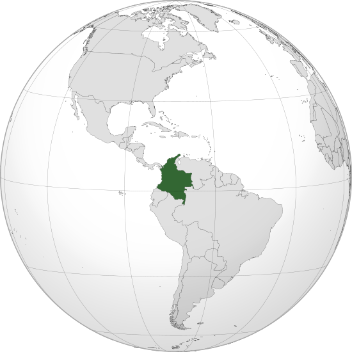
Colombia is located in northern South America. It is bordered in the north by Panama, in the east by Venezuela, and in the south by Ecuador, Peru, and Brazil. Capitol City: Bogotá Largest City: Bogotá Official Language: Spanish Population: 46 million Area: 440,831 square miles GDP: $471.964 billion Government: Unitary presidential constitutional republic President: Juan Manuel Santos Currency: Peso National Bird: Andean Condor 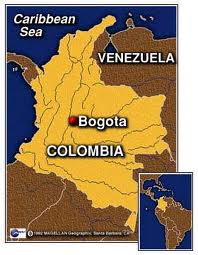 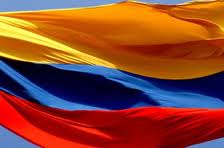 Colombia's flag Colombia's population, from 2000-2012 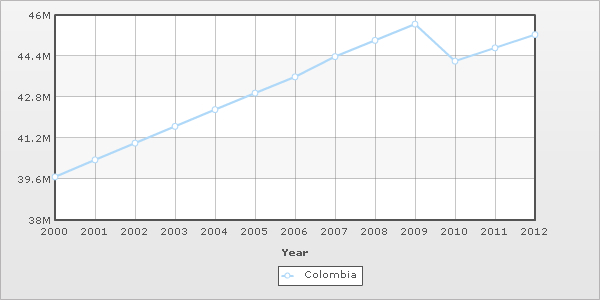
The Flag Colombia's flag is composed of three solid stripes; they are yellow, blue, and red, with yellow occupying the top half of the flag, and blue and red dividing the remaining half horizontally. The yellow represents gold, the blue represents Colombia's coastal seas, and the red represents the blood spilled by the men who won the country's independence. The official name of the Colombian national anthem is Himno Nacional de la República de Colombia, or the National Anthem of the Republic of Colombia. It was originally composed to celebrate the independence of Cartagena. The official flower is the Cattleya trianae, an orchid. |
|
References http://en.wikipedia.org/wiki/Colombia http://www.indexmundi.com/g/g.aspx?v=21&c=co&l=en http://www.mongabay.com/history/colombia/colombia-population_trends.html http://en.wikipedia.org/wiki/Demographics_of_Colombia#Vital_statistics http://www.migrationinformation.org/Profiles/display.cfm?ID=344 |
||
