Governmental Organization The government of Colombia is a unitary presidential constitutional republic, in which the President is both head of government and head of state, similar to the United States and unlike the governments of many European countries, where the head of state is a monarch and the head of government is a prime minister or parliament. It is democratic, and elections for the president are held every four years by popular vote, unlike the electoral vote in the United States. The president is limited to two such four-year terms. Again similar to the United States' government, Colombia's government is divided into three branches: the Executive, consisting of the president, vice president, and Council of Ministers; the Legislative, consisting of the Senate and the Chamber of Representatives; and the Judicial, consisting of the Council of State and the Supreme Court, which heads the court system. Within the legislative branch of government, there are 102 seats in the senate, and 166 in the Chamber of Representatives. The candidates for the senate are voted on nationally and regionally for the Chamber of Representatives. Members of both houses are elected by popular vote two months before the president, and also for a four-year term. The Judicial Branch is led by the Supreme Court, consisting of 23 judges divided into three chambers: Penal, Labor, and Civil and Agrarian. Also included in the Judicial Branch is the Council of State, which has a special responsibility in matters of administrative law. Political Organization of Space There are 33 administrative divisions, or departments in Colombia, each with a capitol city. Colombia's capitol, Bogotá, is its own department, which is surrounded by the department of Cundinamarca and near the center of the country. The total length of the borders Colombia shares with other countries is 6,309 km, or 3,920 miles. (not including sea borders) The country it shares the longest border with is Venezuela, although Colombia is also bordered by Brazil, Ecuador, Panama, and Peru. Economics Crude petroleum is one of the largest product exports in Colombia, accounting for about 24% of the economy. Other important industries are non-monetary gold, coffee, and flowers. There is also a significant source of outside income from illegal drug trade. Tourism is a growing industry in Colombia, although it hasn't been considered a major growth area due to internal armed conflict in the last few years. In addition to the extremely diverse ornithology, Colombia also has several major attractions, such as Cartagena and its own historic surroundings. 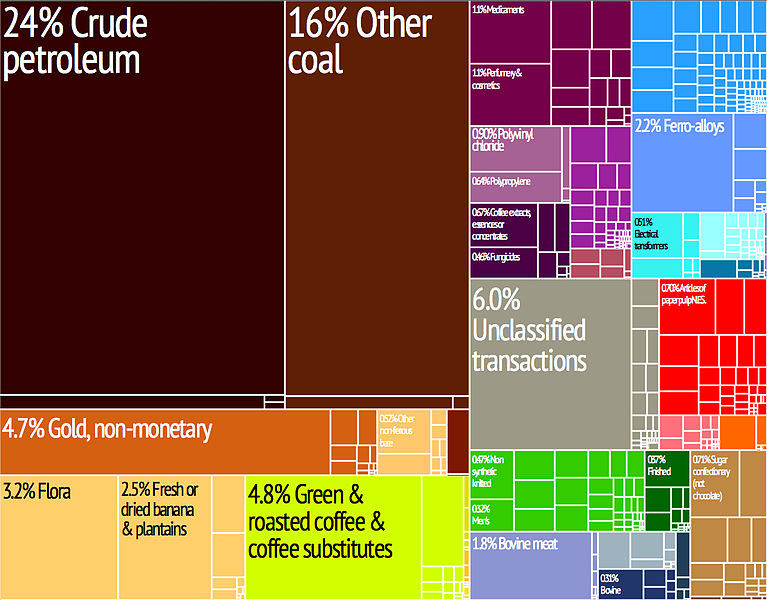 Human Migration In Colombia, as in much of South America, Spanish is the dominant language because of the Spanish conquest in the 16th century. The natural barrier of the Andes mountains restricted movement away from the western coast of Colombia and much of the rest of the continent. The original human inhabitants were mesoamericans migrating into the area, and were later joined by the Arawaks, from the south of the continent. |
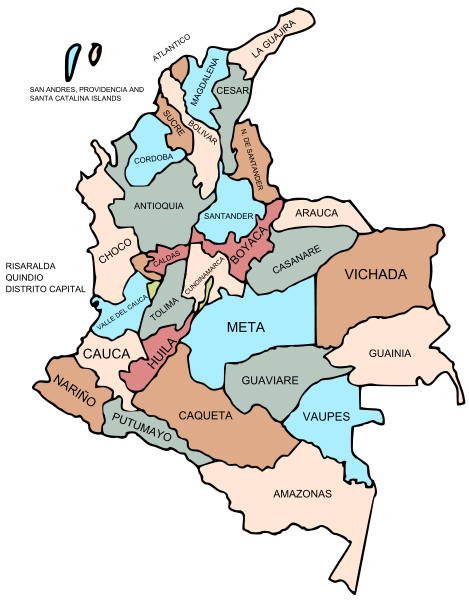 Border Incidents and Separations The Leticia Incident, which was a war that lasted for a few months from 1932 to 1933, was a conflict between Peru and Colombia over the Amazonas territory in the southern part of Colombia. It occurred due to unhappiness with the Salomón-Lonzano Treaty and a heavy tariff on sugar. There was a rebellion in Peru and the current president dispatched two regiments of the Peruvian Army to two settlements located in the present day Amazonas department. Later that year, the Peruvian Army stopped several large Colombian trade ships travelling to one of the settlements. Peru organized a small-scale attack on the Amazon region, which had no Colombian military presence. Colombia quickly organized a response to the Peruvian invasion and there were many back and forth strikes. Both countries met in Rio de Janeiro to sign a treaty, called the Rio de Janeiro Protocol. The Bajo Nuevo Bank, also known as the Petrel Islands, is a small, uninhabited reef located in the Caribbean Sea. It is currently controlled by Colombia, although it is the subject of a territorial dispute, and is also claimed by Jamaica, Nicaragua, and the United States. After the proposal to finalize the construction of the Panama Canal supported by the United States was rejected by the Colombian government, the US sided with the separatist movements in Panama in order to gain control over the French attempt at the Canal. The Thousand Years war between the liberal and conservative parties in Colombia and Panama devastated the region and strengthened the separatist movement. In 1903 Panama, formerly part of Colombia, became a separate country and was recognized as such by the US, France, and 15 other countries in the November of that year. 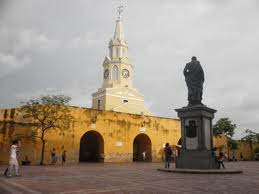 |
|
References: http://en.wikipedia.org/wiki/Colombia#Government http://www.indexmundi.com/colombia/land_boundaries.html http://en.wikipedia.org/wiki/Leticia_Incident http://answers.yahoo.com/question/index?qid=20090210104431AAl8ebP http://en.wikipedia.org/wiki/Panama_Canal http://en.wikipedia.org/wiki/Bajo_Nuevo_Bank http://en.wikipedia.org/wiki/Colombia#Economy http://en.wikipedia.org/wiki/File:Tree_map_export_2009_Colombia.jpeg |
||

